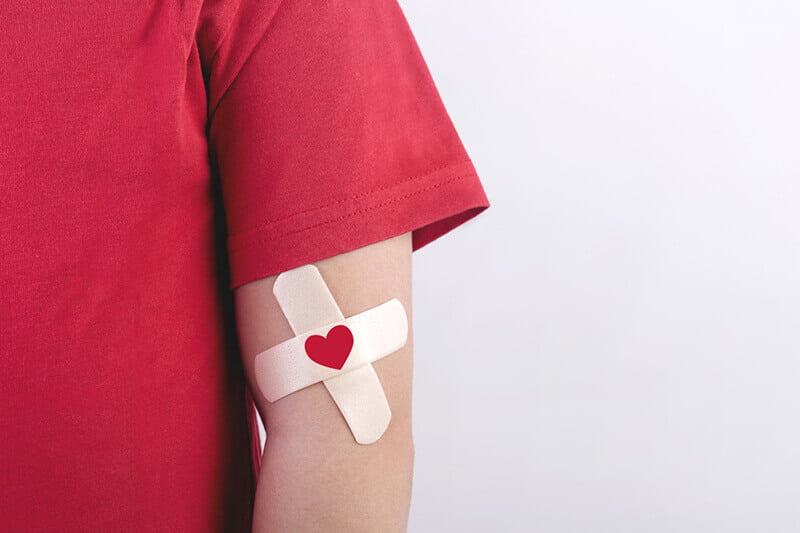
Blood cannot be manufactured: it can only come from a donor. In Tunisia, about 250,000 units were collected in 2025, while needs are estimated at between 290,000 and 300,000 units a year. Every donation counts. This article explains who can donate, the contraindications, how a donation works and what to do afterwards.
Why give blood?
Blood products are essential to treat people with chronic or serious illnesses, carry out complex surgery, treat accident victims and save mothers and newborns in critical situations.
According to the National Blood Transfusion Centre (CNTS), Tunisia needs about 40,000 additional donations each year to meet its needs. The World Health Organization recommends relying on regular, voluntary, unpaid donations, whose screened blood it calls “the cornerstone” of a safe and sufficient supply.
The CNTS urges everyone to take part in collection campaigns and to become a regular donor: it is the regularity of donations that keeps stocks sufficient to meet the needs of patients and injured people. Collections are organised throughout the year, including in public spaces.
Who can donate?
Under the Tunisian rules, anyone can give blood who is:
- aged 18 to 65;
- weighing at least 50 kg;
- judged fit to donate by the doctor of the transfusion facility.
How often?
A man can give up to five times a year, a woman up to three times a year. The CNTS states a minimum interval of two months between donations; the official administrative page specifies 8 weeks for men and 12 weeks for women.
What are the contraindications?
At every donation, the doctor checks through an interview and an examination that there is no temporary or permanent contraindication. The official page mentions in particular:
- viral infections (HIV, hepatitis B and C, influenza) or bacterial infections (sore throat, gastroenteritis);
- certain medical treatments;
- conditions such as anaemia, high blood pressure, diabetes or cardiovascular disease.
An ongoing infection such as influenza rules out donation until recovery; some trips abroad and a low haemoglobin level can also prevent you from giving. If in doubt, answer the questionnaire frankly: the decision rests with the doctor, to protect both donor and recipient.
Blood groups and compatibility
Your blood group (A, B, AB or O) and Rh factor determine who can receive your blood. For red cells, people of group O negative are “universal donors” and those of group AB positive are “universal recipients”; for plasma, it is people of group AB who are universal donors, according to this sheet from the French Hospital Federation. The CNTS, for its part, says that group O donors are in particularly high demand.
The donor card issued after your first donation shows your blood group: keep it.
Whole blood, platelets, plasma: what is the difference?
The most common donation is whole blood. In Tunisia, the amount collected is about 420 to 480 ml depending on weight, taking 8 to 10 minutes. Other types of donation exist. In France, for example, platelets and plasma are collected by apheresis: a machine separates the wanted component and returns the rest to the donor. These donations take longer (about 1 hour for plasma and 1 hour 30 minutes for platelets) and follow their own rules. Ask the CNTS which donations are offered in your region.
Is donating safe for the donor?
The amount collected never exceeds 8% of total blood volume, a volume the body replaces quickly. All equipment used is sterile, single-use and destroyed after each collection, which ensures the safety of both donor and recipient.
An interview and a medical examination take place before every donation: they check that you can give safely that day.
How does a donation work, and what should you do afterwards?
You can go to the CNTS or to a regional blood transfusion centre with your national identity card, with or without an appointment. After registration, a doctor sees you to confirm that you can donate. The visit lasts about 45 minutes, including screening and rest.
After the donation
Rest and have the snack provided (water, cake or milk), even if you are not hungry, as the official page recommends. It is also advisable to drink plenty and eat something.
What donating gives you
- A full medical check-up and screening for syphilis, hepatitis B and C and HIV. If a result is positive, the centre provides information and referral to appropriate follow-up.
- A donor card showing your blood group, which gives you and your close relatives (parents, spouse, children) priority access to blood for one year.
Further reading at La Rose Clinic
Frequently asked questions
What is the minimum age to give blood in Tunisia?
You can donate from 18 to 65, provided you are in good health, weigh at least 50 kg and are judged fit by the doctor.
How many times a year can you donate?
Up to five times a year for a man and three for a woman, with a minimum interval between two donations.
Which illnesses prevent you from donating?
The official page mentions infections (HIV, hepatitis, influenza), anaemia, high blood pressure, diabetes and cardiovascular disease. The doctor decides during the interview.
What should you do after giving blood?
Rest, drink and have the snack provided, even if you are not hungry, and keep your donor card.
Is giving blood dangerous?
No. The amount collected does not exceed 8% of blood volume, and the equipment is sterile and single-use.
References
- Nessma, Don de sang en Tunisie : le CNTS rappelle les règles (2025) (www.nessma.tv)
- Idaraty (portail administratif tunisien), Don du sang total (idaraty.tn)
- AllAfrica / La Presse, Tunisie : 40 000 dons supplémentaires nécessaires chaque année (2026) (fr.allafrica.com)
- OMS, L’OMS appelle à augmenter le nombre de donneurs volontaires (2015) (www.who.int)
- Hopital.fr (FHF, avec l’EFS), Don de sang (www.hopital.fr)
- Hopital.fr (FHF), Les groupes sanguins (www.hopital.fr)
This article is for information only. It does not replace a medical consultation: if in doubt, talk to your doctor.