If there is no contraindication, staying active during pregnancy is recommended. This article summarises what the WHO, the HAS, ACOG and the NHS say: expected benefits, recommended amount of activity, suitable sports and those to avoid, signs to stop, and resuming exercise after birth.
What are the benefits for mother and baby?
According to the HAS (French National Authority for Health), physical activity helps maintain fitness, limit excessive weight gain and possibly prevent gestational diabetes, high blood pressure and pre-eclampsia. It also reduces lower back and pelvic pain and the risk of urinary incontinence, and helps prevent postpartum depressive symptoms.
As for childbirth, the HAS speaks of a possible reduction in the use of caesarean section, and the ACOG mentions observational studies linking exercise with fewer caesareans and faster recovery. These are associations, not certainties: no precise percentage can be promised. As for the idea that babies are born “calmer”, none of the sources consulted claims it.
How much activity? The recommendations
The WHO (2020 guidelines) recommends at least 150 minutes a week of moderate-intensity aerobic activity for pregnant women, combined with muscle strengthening, gentle stretching and pelvic floor exercises, according to a literature review comparing the recommendations of several countries. More intense activity remains possible if it was already part of your routine before pregnancy.
The NHS sets the same target of 150 minutes, which can be split into 10-minute sessions, with the “talk test”: you should be able to talk while moving. The HAS recommends 150 to 180 minutes a week, in at least 3 sessions, with a 10 to 15 minute warm-up and cool-down. For a woman who is inactive, start gradually, for example with 10 minutes a day.
Which activities should you choose?
The NHS lists the following as suitable options:
- walking, easy to fit into daily life;
- swimming and antenatal aqua-aerobics, as the water supports your body weight;
- antenatal yoga, for relaxation and breathing;
- low-impact classes designed for pregnancy;
- pelvic floor and deep abdominal exercises.
The HAS also recommends moderate-intensity muscle strengthening, which helps posture and relieves the back. The NHS specifies that running is advised only if you were already doing it.
What to avoid
According to the NHS and the HAS:
- contact sports or sports with a risk of a blow to the abdomen (martial arts, football, rugby, tennis, squash);
- activities that expose you to falls or loss of balance (horse riding, skiing, gymnastics);
- scuba diving, considered unsafe for the baby;
- excessive heat and high altitude, with regular hydration;
- exercises lying on your back from 24 weeks of amenorrhoea (the HAS) and holding your breath during effort.
Signs to stop and contraindications
The HAS recommends stopping exercise immediately and seeking medical advice in the event of persistent breathlessness, chest pain, regular painful contractions, bleeding or leaking of fluid, dizziness, faintness or headache, muscle weakness affecting balance, or pain or swelling in a calf.
Absolute contraindications include in particular premature rupture of the membranes, preterm labour in progress, persistent unexplained bleeding, placenta praevia after 24 weeks, pre-eclampsia, cervical insufficiency or a cerclage, fetal growth restriction and a triplet pregnancy. Other situations (twin pregnancy from 28 weeks, poorly controlled diabetes, extreme obesity) require an individual assessment with the obstetrician.
Weight gain during pregnancy
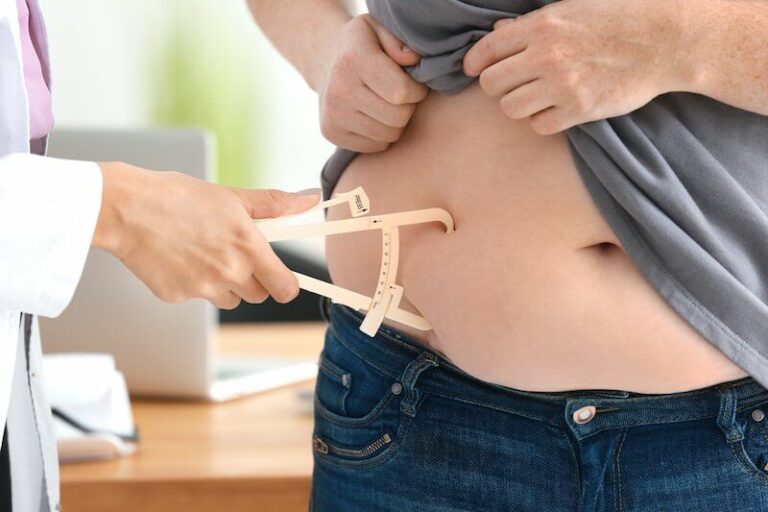
According to the NHS, most pregnant women gain between 10 and 12.5 kg, mainly after the 20th week, with wide individual variation. Excessive gain may increase the risk of high blood pressure, gestational diabetes and pre-eclampsia; insufficient gain may contribute to premature birth or low birth weight. A restrictive diet is not recommended during pregnancy. Your midwife or doctor will give personalised advice, particularly if your BMI is above 30 or below 18.5.
After childbirth and when to seek advice
The HAS states that a postnatal check-up is needed before resuming exercise, followed by pelvic floor rehabilitation. Resumption is gradual, with an indicative delay of 4 to 6 weeks after a vaginal birth and 8 to 10 weeks after a caesarean; high-impact activities (running, jumping) wait until pelvic floor function is considered normal. Physical activity does not alter either the quantity or the quality of breast milk if you are breastfeeding.
Talk to your doctor or midwife about your exercise plans from the start of pregnancy, particularly if you have a chronic condition, a high-risk pregnancy or any doubt.
Further reading at La Rose Clinic
Frequently asked questions
Does exercise reduce the risk of caesarean section by 34%?
None of the sources consulted confirms this figure. The HAS speaks of a possible reduction in the use of caesarean section, without a precise percentage.
How many minutes of exercise a week during pregnancy?
The WHO and the NHS recommend at least 150 minutes of moderate activity a week, if there is no medical contraindication; the HAS states 150 to 180 minutes.
Can I keep running?
The NHS says running is advised only if you were already doing it. Adapt the intensity and ask your doctor or midwife for advice.
Which activities are not recommended?
Contact sports, activities with a risk of falling, scuba diving, excessive heat and high altitude.
When can I resume exercise after giving birth?
After the postnatal check-up; the HAS gives an indicative delay of 4 to 6 weeks after a vaginal birth and 8 to 10 weeks after a caesarean.
References
- Activité physique et grossesse / post-partum (HAS) (has-sante.fr)
- Physical activity recommendations in pregnancy after the WHO 2020 guidelines (revue) (pmc.ncbi.nlm.nih.gov)
- Exercising in pregnancy (NHS Start for Life) (nhs.uk)
- ACOG Committee Opinion No. 804 (résumé) (opqic.org)
- Weight gain in pregnancy (NHS) (nhs.uk)
This article is for information only. It does not replace a medical consultation: if in doubt, talk to your doctor.