Overweight and obesity are defined as an abnormal or excessive accumulation of body fat that presents a risk to health. Obesity is recognised as a chronic disease. This article explains how it is measured, what it leads to and when to seek medical advice.
How is excess body fat measured?
The standard tool is the body mass index (BMI): weight in kilograms divided by the square of height in metres (kg/m²). In adults, the calculation does not depend on age or sex.
According to the World Health Organization:
- overweight is a BMI equal to or greater than 25;
- obesity is a BMI equal to or greater than 30.
Obesity is then graded in three levels: moderate (30 to 35), severe (35 to 40) and massive (above 40). In children, these thresholds are not used; doctors rely on the growth charts in the health record instead.
BMI is not always enough
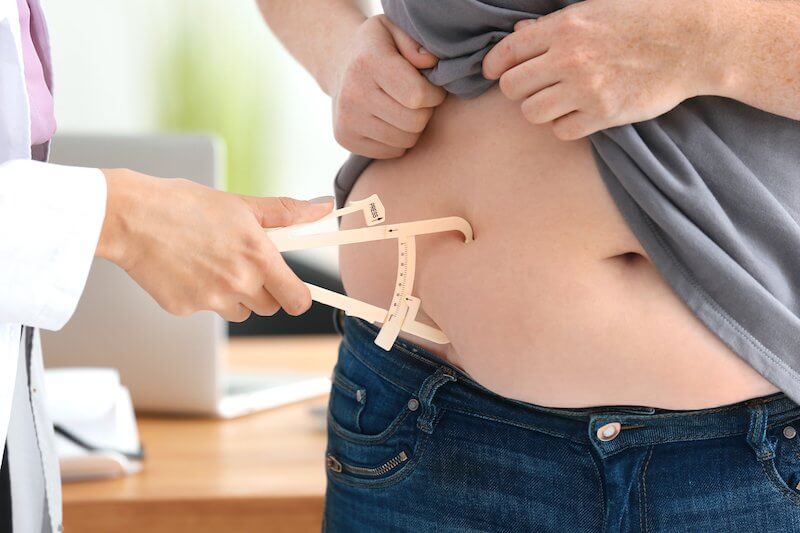
BMI is an indirect marker of body fat. Other measurements, such as waist circumference, help establish the diagnosis. A high BMI alone is not enough to diagnose obesity: the clinical examination is what allows a conclusion.
What are the health risks?
Overweight and obesity are major risk factors for cardiovascular disease and type 2 diabetes, and important causes of premature death. The WHO also lists certain cancers, musculoskeletal disorders such as osteoarthritis, and effects on fertility and quality of life.
The French National Authority for Health (HAS) points out that excess weight increases illness, and that overall mortality rises with BMI, mainly from 28 kg/m² upwards, except in older patients.
Where does weight gain come from?
Among the factors that favour weight gain, the HAS lists:
- excessive energy intake (a very rich diet, sugary drinks, large portions);
- a sedentary lifestyle;
- alcohol consumption;
- certain life stages, such as pregnancy or menopause.
These factors often combine. That is why care addresses diet, physical activity and medical follow-up together.
How can weight gain be prevented?
For the WHO, prevention starts with lifestyle. It recommends limiting sugary drinks and high-calorie foods, reducing total fat and sugar intake, and eating more fruit, vegetables, legumes, whole grains and nuts. Regular physical activity is part of this: for adults, the WHO cites at least 150 minutes a week of moderate-intensity activity, and more may be needed to control weight.
The WHO also stresses that the environment matters and calls for collective measures to create healthier food environments. Individual efforts are therefore easier when people’s surroundings, workplace and family habits all point the same way.
What about children and teenagers?
According to the WHO, 35 million children under five were overweight in 2024, and more than 390 million children and adolescents aged 5 to 19 were overweight in 2022. Children with excess weight often remain so in adulthood and tend to develop diabetes or cardiovascular disease at a younger age.
The WHO considers prevention the most realistic approach. Among other things, it recommends limiting portions and sugar, favouring fruit, vegetables and whole grains, and doing at least 60 minutes a day of age-appropriate physical activity. Exclusive breastfeeding for the first six months is also one of its prevention measures.
In children, body size is tracked on growth charts with the paediatrician or family doctor (paediatrics).
When should you see a doctor?
The HAS recommends that doctors weigh their patients regularly, ideally at every consultation. Talk to your doctor if your BMI is above 25, if your waist measurement is increasing, or if you already have a weight-related condition (diabetes, high blood pressure, joint pain, snoring with pauses in breathing).
The assessment may combine a consultation, blood tests and specialist opinions. When medical measures are not enough and obesity is severe, weight-loss surgery may be discussed by a team.
How does care work in practice?
According to the WHO, health professionals measure and weigh patients, advise them on diet and physical activity, present medical or surgical options and monitor other risk factors (blood sugar, lipids, blood pressure).
The first step is a consultation: the doctor calculates your BMI, measures your waist, looks for associated conditions and goes through your weight history. Blood tests often complete this assessment.
Care is then built with you. It rests first on lasting changes: diet, physical activity and sleep. Depending on the situation, follow-up with a nutritionist, an endocrinologist or a gastroenterologist is offered.
For severe obesity, when these measures have not been enough, a bariatric surgery team will discuss with you whether an operation is worthwhile. The decision is made after a full assessment and detailed information on the benefits, risks and long-term follow-up.
Further reading at La Rose Clinic
Frequently asked questions
How do I calculate my BMI?
Divide your weight (in kg) by your height (in metres) squared. For example, 80 kg at 1.75 m gives 80 ÷ (1.75 × 1.75), or about 26.1: that is overweight according to WHO thresholds.
At what BMI is someone considered obese?
In adults, the WHO defines obesity as a BMI of 30 or more. Overweight starts at 25.
Is BMI valid for children?
No. In children and adolescents, growth charts adapted to age and sex are used.
What does the WHO recommend to prevent overweight?
Limit sugary drinks and high-calorie foods, eat more fruit, vegetables and whole grains, and be physically active regularly.
How much should a child move each day?
The WHO recommends at least 60 minutes a day of age-appropriate physical activity.
References
- OMS, Obésité et surpoids, aide-mémoire (www.who.int)
- OMS Méditerranée orientale, Obésité (www.emro.who.int)
- Inserm, Dossier Obésité (www.inserm.fr)
- HAS, Surpoids et obésité de l’adulte : prise en charge médicale de premier recours (www.has-sante.fr)
- OMS, 6 facts on obesity (www.who.int)
- OMS, Childhood overweight and obesity (www.who.int)
This article is for information only. It does not replace a medical consultation: if in doubt, talk to your doctor.