Liposuction is prepared several weeks in advance. This article presents the usual steps: tests, smoking, medicines, anaesthesia, fasting and organising your return home. Exact instructions vary between teams and with your health, and those of your surgeon and anaesthetist always take priority.
Pre-operative assessment and consultations
Several appointments are usually planned before surgery. As an example, one hospital describes three consultations: an examination with photographs, then a treatment plan, and finally the choice of a date and the handing over of the information form (HUG). A signed consent form must be returned before the operation, and further tests may be requested depending on your situation.
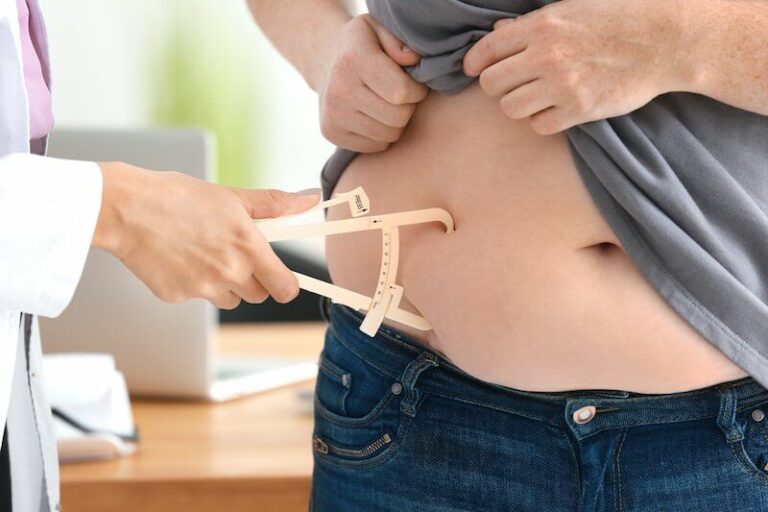
Liposuction is not a weight-loss method (Citadelle): it is a body-contouring procedure for specific areas, and whether it is suitable should be discussed with the surgeon. No result can be promised.
Smoking and medicines: what to tell your team
Smoking slows healing. The length of time you need to stop varies between protocols: at least 3 weeks before and up to 1 month after for one (HUG), at least 1 month before and until healing is complete for another, e-cigarettes included (Citadelle). “One month before and after” is therefore only an approximation, so ask which duration your team uses. A nicotine substitute may be prescribed.
Tell your team about all your treatments, including those bought without a prescription:
- aspirin: according to these two documents, no medicine containing it in the 10 days before the procedure;
- anticoagulants (for example Sintrom) and other “blood thinners”: stopping or adjusting them is decided with the team, never on your own (HUG);
- anti-inflammatory drugs and oral contraception: mention them, as stopping may be requested if risk factors are present (HUG, Citadelle).
Stable weight and realistic expectations
It is generally advised to have the procedure at a stable weight, because a significant weight gain can make the treated area increase in volume again (HUG). Talk about your expectations too: the procedure does not replace a balanced diet or physical activity.
Anaesthetic consultation and types of anaesthesia
An anaesthetic consultation is compulsory for planned anaesthesia and takes place several days in advance (SFAR information leaflet); one document specifies that it takes place at the latest 48 hours before the procedure (Citadelle). The anaesthetist reviews your history, your treatments and your test results, then chooses the technique with you.
- General anaesthesia: a sleep-like state obtained with injected or inhaled medicines (SFAR).
- Regional or local anaesthesia: it blocks the nerves of one area of the body; the choice between local and general anaesthesia depends in particular on the volume of fat to be removed (HUG).
- Sedation or awake anaesthesia: offered by some teams depending on the procedure; ask your anaesthetist what is planned in your case.
The day before and the day of the procedure
Fasting. For anaesthesia, the usual guidance is to stop solid food, sweets and chewing gum 6 hours beforehand, and to be able to drink clear liquids (water, tea) until 2 hours beforehand (HUG). Another document simply states that a 6-hour fast may be requested depending on the anaesthesia (Citadelle). Follow the written instructions from your anaesthetist, who will give the exact times.
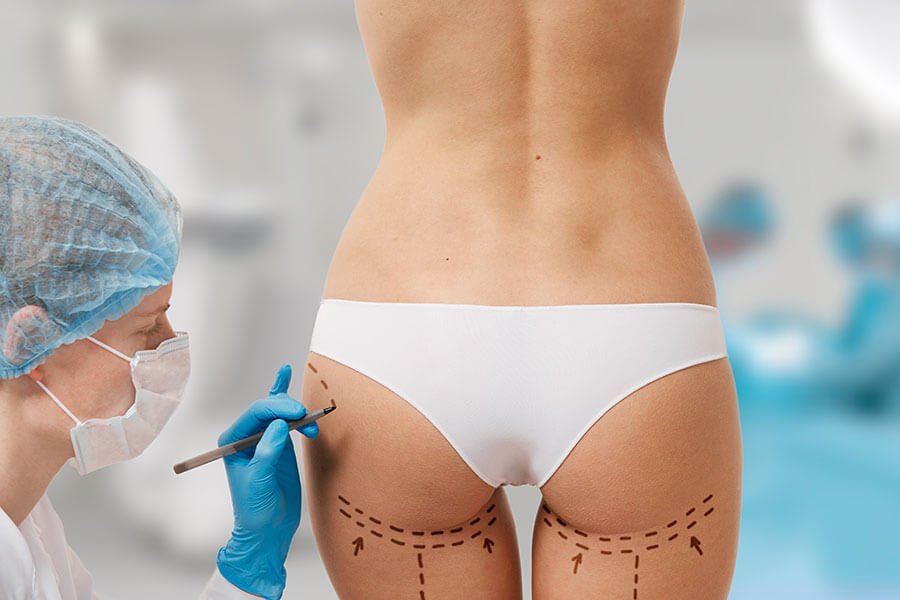
Skin hygiene. Washing instructions (for example a shower with antiseptic soap the evening before and on the morning) may be given: follow those of your team. The markings of the area to be treated are generally drawn the day before or that morning (HUG).
Organising your return home and the compression garment
After a moderate liposuction, going home the same day is possible after monitoring, with someone to accompany you; a hospital stay of 24 hours or more may be needed if the volume is larger. Time off work of 7 to 10 days is mentioned, depending on your job and the extent of the procedure (HUG).
Compression is applied after the procedure, followed by a compression garment: 3 to 6 weeks according to one document (Citadelle), 6 weeks according to another (HUG). Arrange in advance for someone to accompany you, for transport, and for the garment prescribed in your size.
When to talk to your doctor
Contact your surgeon or anaesthetist before the procedure if you have a fever, a skin infection, a new treatment, a possible pregnancy, doubts about a medicine or difficulty stopping smoking. After the procedure, report without delay any unusual pain, fever, significant swelling or shortness of breath.
Further reading at La Rose Clinic
Frequently asked questions
Do I need to stop smoking before liposuction?
Yes, stopping is requested. According to the protocols consulted, it ranges from at least 3 weeks to 1 month before the procedure and continues until healing or for about 1 month afterwards. Your team will specify the duration.
How long do I need to fast?
The usual guidance is 6 hours for solid food and up to 2 hours for clear liquids. The anaesthetist gives the exact times.
Which medicines should I mention?
All of them, in particular aspirin, anti-inflammatory drugs, anticoagulants and oral contraception. Never stop a treatment on your own initiative.
Do I need someone with me on the day of the procedure?
Going home the same day is done with someone accompanying you after monitoring. Also arrange for someone to help during the first days.
References
- Liposuccion (hug.ch)
- Lipoaspiration : information patient (citadelle.be)
- Jeûne avant l’intervention (hug.ch)
- Information du patient sur l’anesthésie (SFAR) (hiaclermonttonnerre.sante.defense.gouv.fr)
This article is for information only. It does not replace a medical consultation: if in doubt, talk to your doctor.