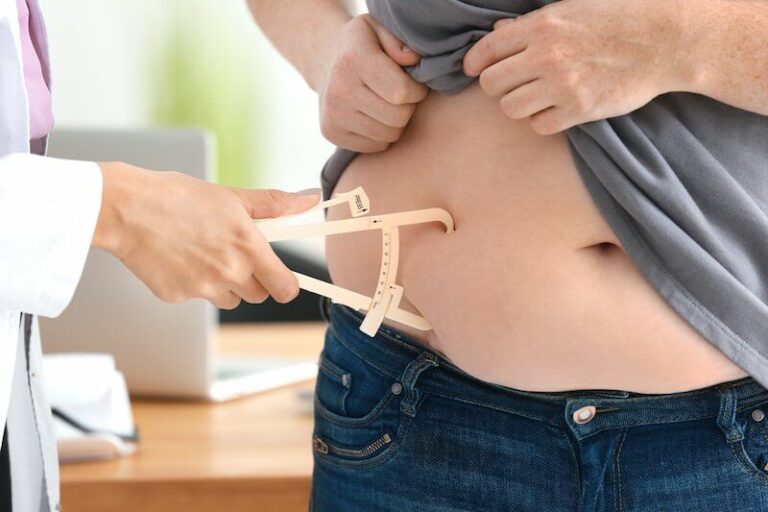

Obesity is a chronic condition, and bariatric surgery is one of several ways to treat it when other approaches have not been enough. These operations reduce the size of the stomach and, for some, change how food is absorbed. This article explains how eligibility is assessed, what the main techniques involve, and what to expect before and after.
How is obesity measured?
The World Health Organization defines obesity in adults as a body mass index (BMI) of 30 or more. BMI is your weight in kilograms divided by your height in metres squared. The WHO reports that adult obesity worldwide has more than doubled since 1990, affecting about 16% of adults in 2024.
BMI is the most widely used screening measure, but it is not the only one. The WHO notes that other measures, such as waist circumference, can also be used, and the ASMBS and IFSO point out that BMI does not take into account sex, age, ethnicity or fat distribution. For this reason, BMI is a starting point for the discussion, not a verdict.
Who can be considered for bariatric surgery?
Criteria differ between countries and have changed over time. The 2022 ASMBS and IFSO guidelines recommend metabolic and bariatric surgery for a BMI of 35 or more, whether or not other conditions are present. They advise considering it for a BMI of 30 to 34.9 with metabolic disease, especially if non-surgical treatment has not produced lasting results. For people of Asian origin they suggest lower thresholds.
In France, the Haute Autorité de Santé (HAS) document for GPs sets out the following conditions:
- a BMI of 40 or more, or a BMI of 35 or more with at least one condition likely to improve after surgery (for example hypertension, sleep apnoea, type 2 diabetes, disabling joint disease or fatty liver disease);
- failure of 6 to 12 months of well-conducted medical, nutritional, dietary and psychological care;
- an assessment by a multidisciplinary team, including a psychological or psychiatric evaluation for every candidate.
Because guidelines evolve, your own team will tell you which criteria apply to your situation.
What are the main techniques?
- Sleeve gastrectomy. A large part of the stomach is removed, leaving a narrow tube. According to the NHS, people lose about two-thirds of their excess weight on average, and the operation is irreversible. Our separate article on this blog describes it in detail.
- Roux-en-Y gastric bypass. A small pouch is created from the top of the stomach and connected directly to the small intestine, so food skips most of the stomach and the first section of the intestine. Mayo Clinic reports about 70% or more of excess weight lost within two years, depending on the individual. The pouch is connected to the intestine, not to the oesophagus.
- Intragastric balloon. This is not surgery: a balloon filled with saline is placed in the stomach through an endoscope, then removed by a second endoscopy. Cleveland Clinic reports an average loss of about 10% of total body weight, roughly 30% of excess weight, with a six-month balloon; the NHS mentions devices that stay up to 12 months.
What are the benefits and the risks?
The aim is to improve health and obesity-related conditions as well as weight. The NHS notes that gastric bypass often improves type 2 diabetes faster than other options. Results vary from person to person and depend on lasting changes in eating and activity.
All operations carry risks. Mayo Clinic lists early risks such as bleeding, infection, reactions to anaesthesia, blood clots and leaks from the stomach or intestinal connections. Longer-term risks include bowel obstruction, dumping syndrome, gallstones, hernias, low blood sugar, ulcers and malnutrition. Some people need a further operation, and weight can be regained without healthy habits.
What happens before and after the operation?
Before
Preparation involves several disciplines over several months, and includes dietary and physical activity education. Contraception is recommended from the moment surgery is scheduled until 12 to 18 months afterwards, because pregnancy is not advised in this period. Oral contraception may be less reliable after operations that reduce absorption, so discuss an alternative.
After
- Most people leave hospital 1 to 4 days after a bypass or sleeve, and resume normal activities within a few weeks.
- Food is reintroduced gradually: liquids first, then solids.
- After operations that reduce absorption, supplements (multivitamins, calcium, vitamin D, iron, vitamin B12) are systematic; after purely restrictive operations they depend on blood tests.
- Medical and surgical follow-up continues for life, shared between the team and your GP.
When should you talk to a doctor?
Speak to your GP if your BMI is in the ranges above, if obesity is affecting your health, or if previous attempts to lose weight have not lasted. Bring a record of past attempts, your medicines and your questions. Your doctor can refer you to a multidisciplinary bariatric team.
After an operation, seek urgent help for chest pain, difficulty breathing, severe abdominal pain, a fast heartbeat, fever, confusion or vomiting blood. These are among the warning signs listed by the HAS and the NHS.
Further reading at La Rose Clinic
Frequently asked questions
What BMI is needed for bariatric surgery?
Guidelines vary. The 2022 ASMBS/IFSO guidelines recommend surgery from a BMI of 35, and consider it from 30 with metabolic disease. French HAS criteria are a BMI of 40, or 35 with a related condition.
Is the gastric balloon surgery?
No. It is placed and removed by endoscopy, without incisions. It is temporary, and the time it stays in depends on the device, from about 6 to 12 months.
How long is the hospital stay?
Most people leave 1 to 4 days after a bypass or sleeve, according to the NHS. Full recovery takes a few weeks.
Can I get pregnant after bariatric surgery?
Contraception is recommended until 12 to 18 months after surgery, and pregnancy should be planned with your team, with nutritional follow-up before conception.
Will I need vitamins afterwards?
Often, yes. After operations that reduce absorption, supplements are systematic, and your team adjusts them according to blood tests.
References
- Obesity and overweight (fact sheet) (who.int)
- 2022 ASMBS/IFSO Indications for Metabolic and Bariatric Surgery (asmbs.org)
- HAS – Chirurgie de l’obésité : information du médecin traitant (has-sante.fr)
- Gastric bypass surgery – Mayo Clinic (mayoclinic.org)
- Intragastric balloon – Cleveland Clinic (my.clevelandclinic.org)
- Weight loss surgery (bariatric surgery) – NHS 111 Wales (111.wales.nhs.uk)
This article is for information only. It does not replace a medical consultation: if in doubt, talk to your doctor.