Liposuction (also called lipoaspiration) reduces localized fat deposits, but not every area or every person responds to it in the same way. This article reviews the areas most often treated, the conditions to be met, recovery and risks, based on leading medical sources.
Which areas can be treated?
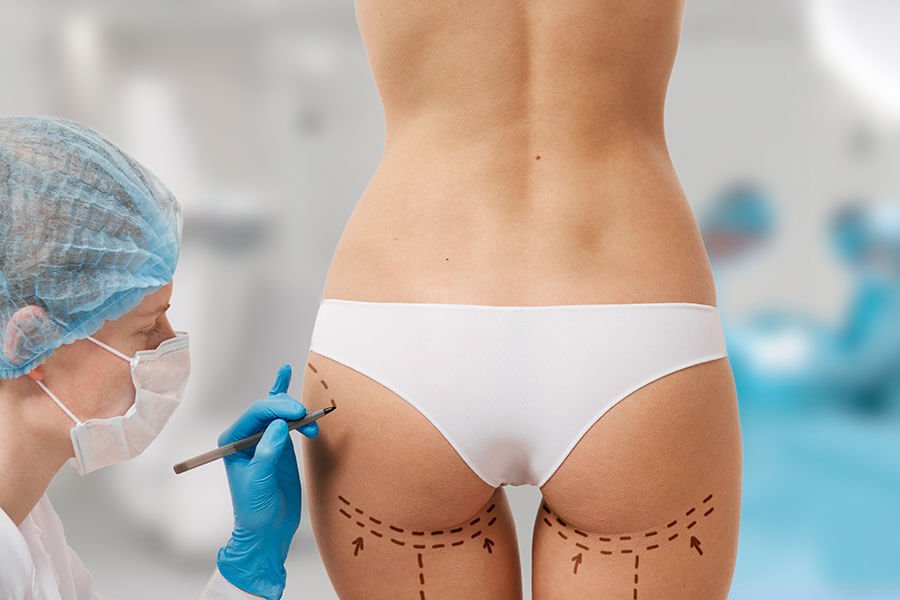
According to the information leaflet produced under the aegis of the SoFCPRE (the French society of plastic surgery), lipoaspiration is used in particular for the outer thighs (“saddlebags”), hips, abdomen, thighs, knees, calves, ankles, arms and back, as well as the face and neck (double chin, jawline). The American Society of Plastic Surgeons (ASPS) lists the double chin, upper arms, outer thighs, abdomen and “love handles” as common areas, and the ankles, inner thighs and upper back as less common ones.
The NHS mentions the buttocks, hips, thighs and tummy as places where fat tends to build up. A single operation can involve several areas, but this does not mean that all areas are treated in the same way: the surgeon decides, after an examination, what is feasible for each patient.
What is treated, area by area, and the limits
- Chin and neck: the fat just under the skin of a double chin. If the skin is loose, suction alone may not be enough.
- Arms: excess fat in the upper arm. An arm with hanging skin may need another procedure.
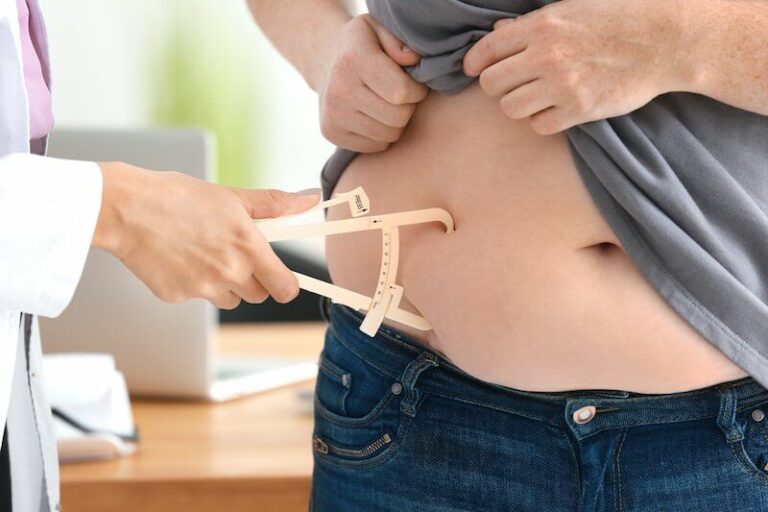
- Abdomen: the fat lying under the skin, above the muscle. According to the ASPS, deep fat around the organs (visceral fat) is not treated.
- Hips and love handles: the fullness at the sides of the waist and pelvis.
- Outer thighs, thighs and knees: the most classic areas, where skin quality determines the final appearance.
- Buttocks: cited by the NHS as an area where fat is deposited; the contour again depends on the skin and the underlying anatomy.
- Calves and ankles: areas cited by the SoFCPRE; the NHS notes that ankle swelling is possible after treatment of the legs.
Liposuction does not remove cellulite or stretch marks: the NHS says so, and the University of Navarra clinic states that it only improves cellulite partially.
Who is this technique for?
Lipoaspiration “is not a weight-loss method” and does not treat obesity, the SoFCPRE leaflet reminds us. It targets localized fat deposits that generally resist diet and exercise. The most suitable profiles are described consistently:
- a stable weight, close to a healthy weight, according to the ASPS;
- firm, elastic skin: the NHS says the technique works best in people who are not overweight and have elastic skin;
- not smoking, also mentioned by the ASPS.
Contraindications cited by the University Clinic of Navarra include recent surgery in the area concerned, poor local circulation, and heart or breathing problems.
How much fat can be removed, and safely?
The sources consulted do not set a universal maximum volume: the ASPS states that the amount removed in one session depends on the surgeon’s assessment of the person’s health and goals. The SoFCPRE leaflet does warn, however, against removing too much fat, which can cause metabolic disturbances or anaemia. This is one of the reasons why a pre-operative check-up and an honest discussion of what is reasonable are essential.
Recovery and results
The operation usually takes 1 to 3 hours and is most often done under general anaesthetic, sometimes with an overnight stay in hospital (NHS). A compression garment is worn for several weeks. According to the SoFCPRE leaflet:
- bruising clears in 10 to 20 days;
- normal activity resumes between 2 and 10 days, and sport at around 3 weeks;
- the skin retracts over 3 to 6 months, and the result is judged at 6 months.
The NHS advises avoiding strenuous exercise for 10 to 12 weeks and notes that swelling can last up to 6 months. The aim is an improvement in body contour, not perfection, and a touch-up can sometimes be discussed from the sixth month onwards.
Risks and alternatives
Common effects are bruising, swelling, numbness and scarring. Less commonly, the NHS lists surface irregularities, a collection of blood (haematoma), lasting changes in sensation, pulmonary embolism or damage to an internal organ. The SoFCPRE identifies thromboembolic events as the most serious complication, along with bleeding, infection and skin necrosis, which are rare.
When the skin is stretched, liposuction alone does not always tighten it: the ASPS mentions the possibility of combining it with other procedures, such as a tummy tuck for the abdomen. Lifestyle measures (diet, physical activity) remain the first lever, and lipoaspiration does not replace them.
When to see a surgeon
A consultation with a qualified plastic surgeon makes it possible to examine the areas, skin quality and medical history, explain the techniques and say whether the procedure is suitable. Prepare your questions, tell the surgeon about any medicines you take (aspirin, anticoagulants, contraception) and whether you smoke, and take time to think. No result can be promised in advance. After the operation, seek medical help promptly if you develop a fever, calf pain, breathlessness or abnormal bleeding.
Further reading at La Rose Clinic
Frequently asked questions
Can liposuction help me lose weight?
No. Medical societies stress that it is not a weight-loss method or a treatment for obesity; it targets localized fat.
Can several areas be treated at the same time?
One operation can involve several areas, depending on the surgeon’s examination and the person’s health. The volume removed remains limited by safety criteria.
Does liposuction remove cellulite?
No. It does not remove cellulite or stretch marks and only improves cellulite partially.
When do you see the result?
An improvement appears after a few weeks, but the skin retracts over 3 to 6 months and the result is judged at about 6 months.
What is the alternative if the skin is loose?
A procedure on the skin, such as a tummy tuck for the abdomen, can be discussed alone or combined with liposuction, depending on the surgeon’s opinion.
References
- Lipoaspiration : fiche d’information (SoFCPRE) (hpsj.fr)
- Liposuction : 10 things to know (ASPS) (plasticsurgery.org)
- Liposuction (NHS) (nhs.uk)
- Liposuccion (Clinique universitaire de Navarre) (cun.es)
This article is for information only. It does not replace a medical consultation: if in doubt, talk to your doctor.