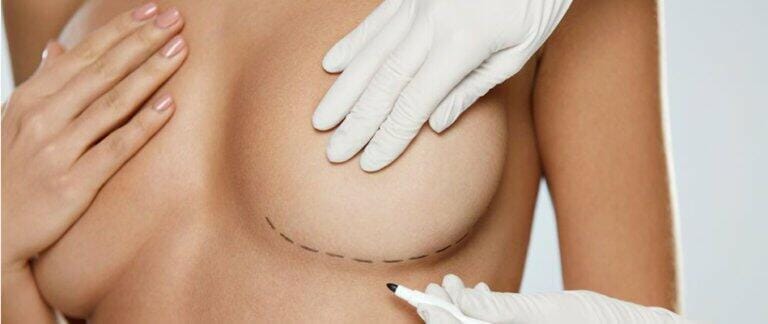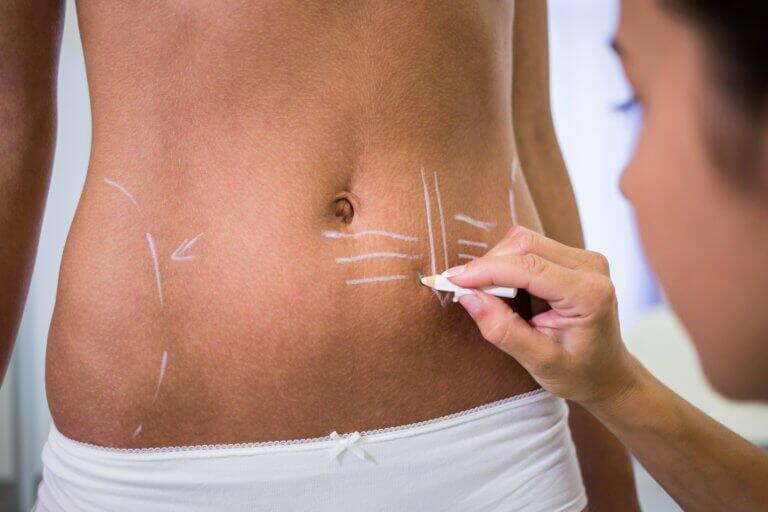
Liposuction, or lipoaspiration, makes it possible to remove localised fat deposits. It is not a weight-loss method: it is used to reshape the body contour. This article explains what you can expect from it, and in what timeframe.
Who is liposuction for?
The procedure targets localised fat deposits that resist diet and exercise: abdomen, hips, saddlebags, thighs, knees, arms. The result depends heavily on skin quality: elastic skin retracts better over the new volume.
A consultation with a plastic surgeon allows the areas to be examined, the skin to be assessed and the request to be checked against what the technique can offer. Professional societies, such as the SoFCPRE (the French plastic surgery society), provide information sheets that the surgeon can give you and go through with you.
Limits and alternatives
Liposuction has clear limits. According to the ISAPS, it does not treat cellulite or obesity, and does not remove deep abdominal fat. It does not reliably tighten very loose skin: where laxity is significant, an operation that removes skin (abdominoplasty, arm lift or thigh lift) may be discussed instead of, or in addition to, liposuction.
Non-surgical fat-reduction techniques target the fat just beneath the skin. The ISAPS states that they are intended for people who already have a healthy weight, that results appear gradually, and that liposuction is better suited to sculpting precisely or removing larger volumes.
When is the result visible?
After the operation, swelling (oedema) always appears. It peaks around the seventh day, then starts to decrease and still persists for about three months. During the first weeks, the visible contour therefore does not reflect the final result.
- Around 3 months: the result becomes noticeable once most of the swelling has gone.
- Around 6 months: the skin has had time to retract completely over the new contours.
The role of the compression garment
The compression garment limits swelling, helps the skin to resettle and contributes to a smooth final contour. Wearing it is among the instructions that most influence the result.
Is the result permanent?
Fat cells that have been removed do not come back. However, those that remain, in the treated area as elsewhere, can grow larger. A significant weight gain after the operation therefore changes the silhouette obtained.
The result is maintained if your weight stays stable. A balanced diet and regular physical activity remain essential.
Imperfections and touch-ups
Like any surgery, liposuction carries risks, which the surgeon explains in detail during the consultation. Possible imperfections include:
- contour irregularities, especially when the skin lacks elasticity;
- asymmetry between the treated areas;
- extensive swelling or bruising that takes time to clear;
- a collection of fluid under the skin (seroma), which sometimes needs to be drained.
An asymmetry may justify a touch-up some time after the operation, once the result has stabilised.
Other, rarer complications are described: the most serious is a thromboembolic event (phlebitis, pulmonary embolism), the risk of which increases with a previous history and which compression stockings and early walking help to reduce. The ISAPS states that the risk depends on the volume of fat removed, the number of areas treated, the length of the operation, general health and any procedures combined with it.
Preparing for the consultation and choosing your surgeon
In France, the SoFCPRE information sheet points out that lipoaspiration may legally be performed only by a qualified plastic surgeon in a surgical setting. The ISAPS recommends consulting a board-certified plastic surgeon to determine whether liposuction alone, or combined with another procedure, is suitable.
What is assessed before the operation
- medical history, physical examination, assessment of the skin and a review of your medicines;
- stopping smoking, recommended one month beforehand because of its effect on healing, and stopping medicines containing aspirin in the 10 days before;
- an anaesthesia consultation, at the latest 48 hours before.
The sheet advises keeping the document, rereading it after the consultation and thinking it over calmly, asking the surgeon all your questions. For the areas to be treated, it helps to arrive with a precise and realistic request.
What happens and how recovery goes
As a guide, one plastic surgeon describes an operating time of one to two hours, as a day case or with one night in hospital, then one to two weeks off work and no sport for a month. These timeframes vary with the number of areas treated and the volume of fat removed; your surgeon will give you the instructions suited to your case.
Liposuction can be combined with other procedures, such as an abdominoplasty or fat grafting (lipofilling) to the buttocks or breasts. In that case, the fat that has been removed is prepared and then reinjected.
Possible complications, such as a haematoma, infection or healing problems, are explained at the pre-operative consultation.
Further reading at La Rose Clinic
Frequently asked questions
Does liposuction make you lose weight?
No. It treats localised fat deposits to reshape the silhouette. It does not replace weight loss.
How long does the swelling last?
Swelling peaks around the seventh day and then gradually decreases. It generally persists for about three months.
Can you regain fat after liposuction?
The cells removed do not come back, but those that remain can grow larger if you gain weight. A stable weight preserves the result.
What is the most serious complication?
According to the SoFCPRE, it is thromboembolic events (phlebitis, pulmonary embolism). The risk increases with a previous history, and preventive measures exist.
Are there alternatives to liposuction?
Non-surgical techniques target superficial fat in people of healthy weight. For very loose skin, an operation that removes skin may be discussed.
References
- SoFCPRE, Fiches d’information patients en chirurgie plastique (www.sofcpre.fr)
- CRPCE, Comment réduire un œdème après liposuccion ? (www.crpce.com)
- Liposuccion : déroulé, suites et risques (chirurgie-esthetique.info)
- Dr Fageot, Lipoaspiration (liposuccion) — informations patient (www.docteur-fageot.fr)
- ISAPS, Liposuction (www.isaps.org)
- ISAPS, Non-surgical body contouring (www.isaps.org)
- SoFCPRE, Fiche d’information Lipoaspiration (www.hpsj.fr)
This article is for information only. It does not replace a medical consultation: if in doubt, talk to your doctor.