Abdominoplasty, commonly called a tummy tuck, removes excess skin and sometimes fat from the abdomen and can tighten the abdominal wall. This article explains who it may suit, how a mini and a full procedure differ, what happens around the operation, typical recovery times and the risks to discuss with your surgeon.
What is abdominoplasty and who is it for?
Abdominoplasty removes loose skin and fat from the abdomen and, when needed, tightens weakened muscles (Mayo Clinic). Loose or protruding abdominal skin can follow pregnancy, ageing, heredity, previous surgery or large weight changes (ASPS). It is not a weight-loss method, and it cannot correct stretch marks, except those located on the skin that is removed.
Good candidates are generally in good health with a stable weight. The NHS notes that it is usually recommended only for people with a healthy BMI, and Mayo Clinic suggests a weight that has been stable for 6 to 12 months. Surgeons may advise against it, or postpone it, if you plan a large weight loss or a future pregnancy, smoke, take blood thinners or have a serious medical condition.
Mini or full abdominoplasty: what is the difference?
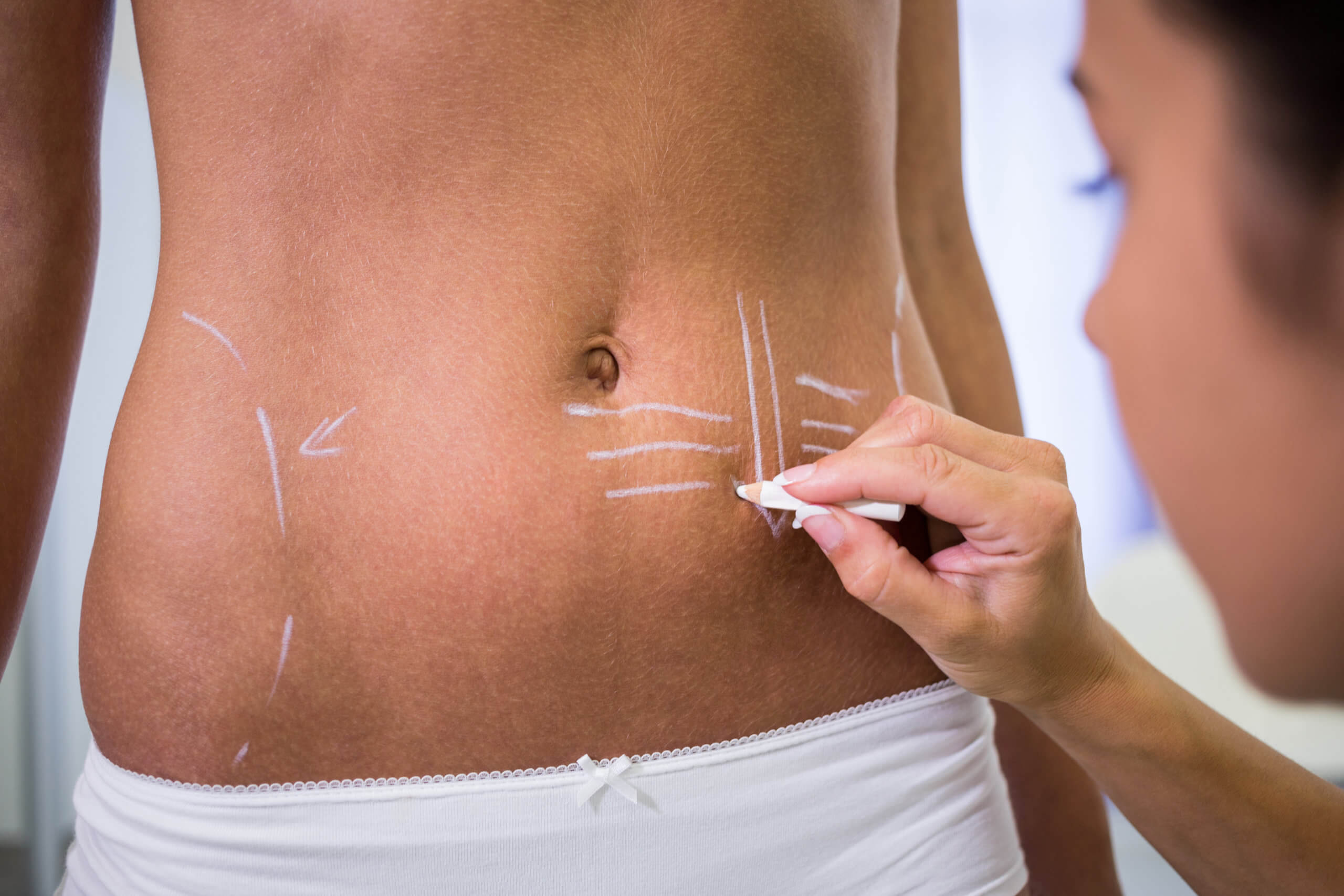
In a full abdominoplasty, the incision runs across the lower abdomen, above the pubic area, and its length depends on how much excess skin is present. The navel is freed and repositioned (NHS). A mini (partial) abdominoplasty uses a shorter incision between the navel and the lower abdomen, usually without a cut around the navel (Cleveland Clinic). An extended version, which wraps around the flanks, exists for larger excesses.
The choice depends on the amount of skin and fat and where it is located, which only a clinical examination can establish.
What about separated abdominal muscles (diastasis)?
Pregnancy can stretch and separate the rectus abdominis muscles, a condition called rectus diastasis. During surgery, the tissue covering the muscles can be stitched to bring them back together and narrow the waistline, which may also ease low back pain in some people (Mayo Clinic). Ask your surgeon whether muscle repair is planned in your case.
How should you prepare for the operation?
The first consultation covers your medical history, medications, an examination of the skin and abdominal wall, and your goals. You will probably be asked to stop aspirin, anti-inflammatory drugs and herbal supplements because they increase bleeding (Mayo Clinic).
- Smoking: it reduces blood flow to the skin, slows healing and raises the risk of tissue damage (Mayo Clinic). One clinic guide gives stopping at least one month before and two weeks after as an example (Cleveland Clinic); your surgeon sets the exact period, which may be longer.
- Pregnancy plans: surgeons recommend postponing the procedure if you want more children, because a new pregnancy can stretch the muscles and skin again (Cleveland Clinic).
- Practical points: fasting instructions come from the anaesthetist, and you should arrange for someone to drive you home and stay with you the first night.
Anaesthesia, duration, hospital stay and drains
The operation is usually performed under general anaesthesia and takes roughly 1 to 5 hours depending on its extent (Cleveland Clinic; the NHS gives 2 to 5 hours). The hospital stay varies between practices: same-day discharge in some settings (Cleveland Clinic), one night in others (Elsan), and a few nights in the NHS description.
Drains are small tubes that evacuate fluid for a few days (Mayo Clinic). Some surgeons place them routinely and others only if needed (Cleveland Clinic). A published series of 113 patients operated without drains, using careful closure techniques, reported seromas in 8.8% of cases, while earlier studies reported rates between 1% and 50% (ASPS). Whether to use drains is a surgeon-dependent decision to discuss beforehand.
Recovery: garment, return to work, scar and final result
Walking can begin as early as the first day, which lowers the risk of blood clots (Mayo Clinic). An abdominal binder or compression garment is worn for a period that ranges from about 15 days to 4 weeks (Elsan) up to 6 to 8 weeks (Mayo Clinic), depending on the surgeon.
- Work: from about one week (Cleveland Clinic) to 2 to 4 weeks (Mayo Clinic) or 4 to 6 weeks (NHS), depending on how physical your job is.
- Exercise: avoid lifting and straining for about six weeks and sports for at least eight weeks according to Mayo Clinic; follow your surgeon’s own schedule.
- Result and scar: the final result can take up to three months, and the scar keeps improving for up to a year (Cleveland Clinic). The scar is placed along the swimsuit line and may take 12 to 18 months to fade (NHS).
What are the risks?
Abdominoplasty is major surgery. Risks specific to it include fluid collection (seroma), poor wound healing, scarring and fat tissue damage or death (necrosis), plus numbness that usually improves over months (Mayo Clinic). The NHS also lists haematoma, thick scars, skin bulges at the scar ends, blood clots and infection, and notes that the desired result is not always achieved and a further operation is sometimes needed.
In an analysis of nearly 25,000 procedures in the United States, major complications occurred in 3.1% of abdominoplasties performed alone, and in up to 10.4% when combined with body contouring and liposuction; combined procedures were the largest risk factor (ASPS). Smoking increases the risk of skin necrosis (Elsan).
When to consult and what to ask your surgeon
Book a consultation if loose abdominal skin or separated muscles bother you and your weight is stable. Useful questions include:
- Which type is suitable for me (mini, full or extended), and will the muscles be repaired?
- Will drains be used, and for how long?
- Which garment, for how long, and when can I return to work and exercise?
- Where will the scar be?
- What happens if I plan another pregnancy or lose more weight?
Coverage depends on your country and insurer. In France, for example, the procedure is generally considered aesthetic and not reimbursed, except in exceptional cases such as a hanging abdominal apron (Elsan); check the rules that apply to you. After surgery, contact your surgical team promptly if you notice fever, increasing pain or swelling, calf pain or breathlessness.
Further reading at La Rose Clinic
Frequently asked questions
Is abdominoplasty performed under general anaesthesia?
Yes, it is usually performed under general anaesthesia, and the operation takes roughly 1 to 5 hours depending on its extent.
Can I have a tummy tuck if I want another pregnancy?
Surgeons generally advise postponing it, because a new pregnancy can stretch the skin and muscles again and affect the result.
How long before I can go back to work?
Published guidance ranges from about one week to 4 to 6 weeks, depending on your job and your surgeon; sports usually wait at least 6 to 8 weeks.
Will I have a scar?
Yes. It is placed along the lower abdomen, usually hidden by underwear or a swimsuit, and keeps improving for up to a year or more.
Is a tummy tuck a way to lose weight?
No. It removes excess skin and some fat but is not a weight-loss method; it is usually recommended at a stable, healthy weight.
References
- Tummy tuck (abdominoplasty) (nhs.uk)
- Tummy tuck (mayoclinic.org)
- Tummy Tuck (Abdominoplasty): Surgery, Recovery, Risks and Results (my.clevelandclinic.org)
- Tummy Tuck complications: study looks at rates and risk factors (plasticsurgery.org)
- Adding liposuction helps prevent common complication after tummy tuck (plasticsurgery.org)
- Abdominoplastie : définition, déroulement, résultats (elsan.care)
This article is for information only. It does not replace a medical consultation: if in doubt, talk to your doctor.